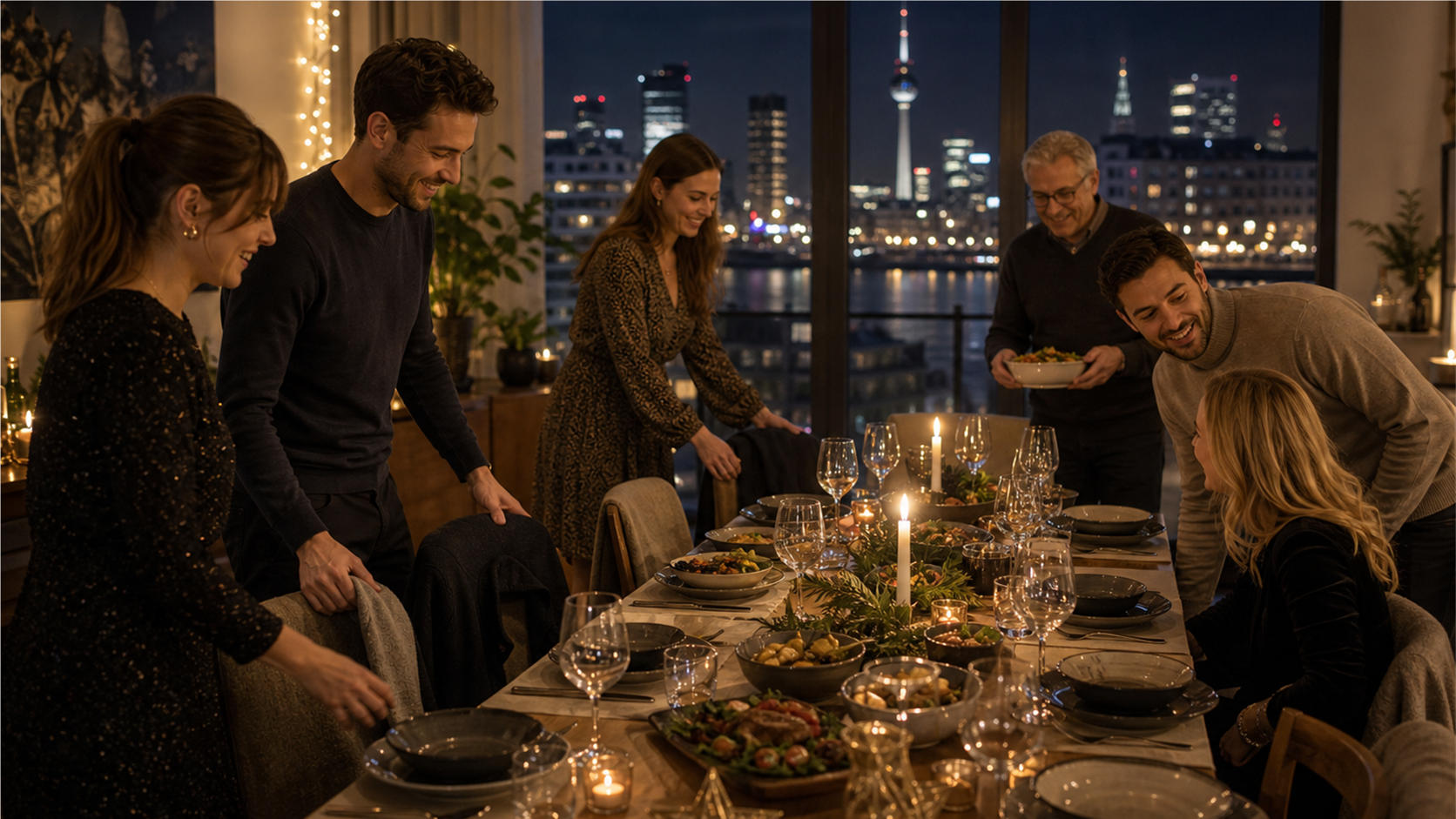
Festive New Year's Eve dinner table overlooking lights in a German city

New Year's Eve

Not a public holiday Planning day Falls on Thursday

New Year's Eve on 31 December is not a statutory public holiday. For 2026, treat workplace rules, published shop hours, celebrations and the journey home separately from statutory New Year's Day.

Author
Brückentage-Planer.de editorial team
Last checked
Source basis
official sources and editorial review
Overview

At a glance

What matters for New Year's Eve before you plan the days around it.

Date
New Year's Eve falls on Thursday in 2026.
Status
Planning day
Not a statutory public holiday; published hours and workplace rules vary.
Applies in
nationwide
Thursday 31 December 2026 remains a working day. One leave day connects New Year's Eve to Friday's statutory New Year's Day and the weekend.
Planning cue
Check surrounding days
For final errands, check the specific shop's published hours. Then establish the journey home, working time and the separate New Year's Day holiday.

31 December remains a working day in 2026. Time off or a shorter shift comes from the contract, workplace or collective rule; shop hours, the event and the journey home each need their own published information.

Thursday 31 December 2026 remains a working day. One leave day connects New Year's Eve to Friday's statutory New Year's Day and the weekend.

Leave calculation

Bridge days and leave

Enter the working day, party and New Year's Day separately

For final errands, check the specific shop's published hours. Then establish the journey home, working time and the separate New Year's Day holiday.

31 December and 1 January need separate entries: New Year's Eve remains a working day, while New Year's Day is a statutory public holiday.

Taking Thursday 31 December 2026 as leave joins the evening to New Year's Day on Friday and the weekend for four days off.

Teams establish duties, leave and cover from the rota, contract and any applicable workplace or collective rule; the private plan then adds the booking, meeting point and journey home.

Silvester falls on Thursday, 31 December 2026. Anyone working that day should settle handover, availability and the end of the working day before the year changes.

The Friday that follows is New Year's Day, the statutory public holiday. It does not retrospectively make New Year's Eve a holiday and does not replace checking the night service or the return journey.

Practice

Everyday rules

Thursday 31 December 2026 remains a working day. One leave day connects New Year's Eve to Friday's statutory New Year's Day and the weekend.

Work

1 leave day = 4 days

New Year's Eve is Thursday 31 December in 2026 and is not a public holiday. Taking Thursday off links New Year's Day on Friday to the weekend for four days away.

School and family

Christmas break

School holidays, childcare and handovers differ by state and household. Fix collection times and the journey home before booking the evening.

Local service

Last service

For 31 December, check last departures, overnight transport and the 1 January return directly with the operator.

Published hours

Not a public holiday

Special hours on 31 December come from the provider, workplace or local rules, not statutory holiday status. Use the published closing time.

New Year's Eve has no general statutory public-holiday status in any German state. Early closing, a free afternoon or a workplace celebration comes from the published opening hours, contract or rota.

Schools and childcare providers also follow their own holiday and closure calendars. For care on 31 December, use the institution's notice rather than the familiar name of the evening.

New Year's Eve table with raclette, drinks and city lights
Legislation

Legal context

The legal question is narrow; the planning question around New Year's Eve is broader.

2026 status

Not a statutory public holiday; published hours and workplace rules vary.

Pay and rota

Section 2 EFZG does not create public-holiday pay on 31 December; rota, leave, company policy or a collective agreement governs the day. New Year's Day is a separate statutory holiday.

Working time and time off

31 December is not a statutory public holiday in any German state. Whether a full leave day, time off in lieu or shorter workplace hours apply depends on scheduled hours and the applicable contract, workplace, collective or employer rule.

Statutory holiday rest and the related pay rules apply to 1 January, not automatically to 31 December. Keep the two dates separate in the work calendar.

Whether New Year's Eve ends early or a normal shift runs is determined by the employment contract, collective or works agreement and the actual rota. There is no general half-day public-holiday rule.

FAQ

Questions

Common questions about New Year's Eve

Is New Year's Eve a public holiday in Germany?

No. 31 December is not a statutory public holiday in any German state; legally, it is a regular working day.

How long are shops open on 31 December in Germany?

There is no single nationwide closing time for every shop. Check the published hours for the specific location and the rules that apply there.

Do I have to use a full day of leave for New Year's Eve?

There is no public-holiday entitlement on 31 December. Whether and how leave is recorded depends on scheduled hours and the applicable employer, employment-contract, works-agreement or collective-agreement rule.

How can New Year's Eve create four days off in 2026?

Taking Thursday 31 December as leave connects the evening to statutory New Year's Day on Friday and the following weekend.

Which New Year's Eve customs are common in Germany?

Lucky charms, fortune-telling, Dinner for One and the shared countdown are familiar forms; follow the current published guidance for products and fireworks.

What should I check for a New Year's Eve event?

Confirm the reservation or admission, meeting point, local guidance and the actual journey home before the party starts.

What works well for New Year's Eve dinner?

Raclette, fondue, prepared food or a confirmed restaurant reservation can fit cleanly around the meeting time, countdown and journey home.

31 December

Name and year-end

Why 31 December is called Silvester in German

The German name Silvester comes from Pope Sylvester I, whose feast day falls on 31 December.

The church name became the common German label for the whole year-end evening. Today the date combines private parties, public events and the transition into New Year's Day.

The name does not create public-holiday status. For employment purposes, 31 December remains separate from the statutory holiday on 1 January.

In Germany, the year-end evening brings together private rituals, television, visits and public events, but it does not prescribe one form of celebration.

Because the name is familiar, the legal difference from New Year's Day is easy to miss. A reliable plan starts with the status of the actual date, not its common label.

New Year's Eve

Customs and fireworks

Lucky charms, fortune-telling and Dinner for One

German New Year's Eve customs include lucky charms and fortune-telling. For any casting or interpretation activity, use only currently permitted products and the published instructions for that particular version.

Dinner for One is a long-running German television tradition on 31 December. For many parties, the countdown, music and a shared midnight moment matter more than one fixed national ritual.

Fireworks are part of many plans, but they also create particulate pollution and other burdens. Whether, where and how to celebrate therefore belongs in the evening plan.

Evening plan

Dinner, event and journey home

Set the reservation, food, admission and journey home before the countdown.

For dinner, a restaurant or a party, use confirmed reservation and admission times. At home, prepare shopping, raclette or fondue, drinks and a quiet space for children or guests before the evening.

For a public event, put the meeting point, admission, any bag policy and the actual night transport in the same plan. A ticket does not replace checking the last connection.

Set the journey home before the party starts: published night transport, taxi, collection or an overnight stay. Travel on statutory New Year's Day is a second connection that needs its own check.

Next steps

Plan next

Put the end of work, final errand, event, journey home and New Year's Day in a clear order.

Confirm the rota and published opening hours first. Then add dinner or the reservation, meeting point, admission and the actual journey home.

1 January is the statutory holiday in the block. Plan the return, overnight stay and first appointment of the new year separately from New Year's Eve.

If the evening includes a city event, keep the organiser, admission details and last connection with the address. That turns a calendar entry into a usable evening plan.

Before the new year begins, check the first Monday back and the relevant regional school holidays. Leave, childcare and availability belong beside the holiday as separate entries.

Sources & further reading

  1. Income Tax Act section 3b : Tax context for surcharges on Sundays, public holidays and specific evening hours.
  2. German Environment Agency on New Year's Eve fireworks : Environmental and health context for fireworks around New Year's Eve.
  3. NDR on German New Year's Eve customs : Public-broadcaster background on Pope Silvester I, fortune-telling customs and Dinner for One.
  4. KMK holiday calendar downloads : School-break downloads for calendar comparison.
  5. New Year's Day (1 January) : The year-start directly after New Year's Eve; useful for return travel and first workdays.
  6. Christmas Eve (24 December) : The practical planning day before the two statutory Christmas holidays.
  7. Epiphany (6 January) : The regional end of the Christmas block in Baden-Württemberg, Bavaria and Saxony-Anhalt.
  8. Working Time Act section 9 : Federal rule for Sunday and public-holiday work exceptions.
  9. Continued Remuneration Act section 2 : Pay rule after statutory scope is established.