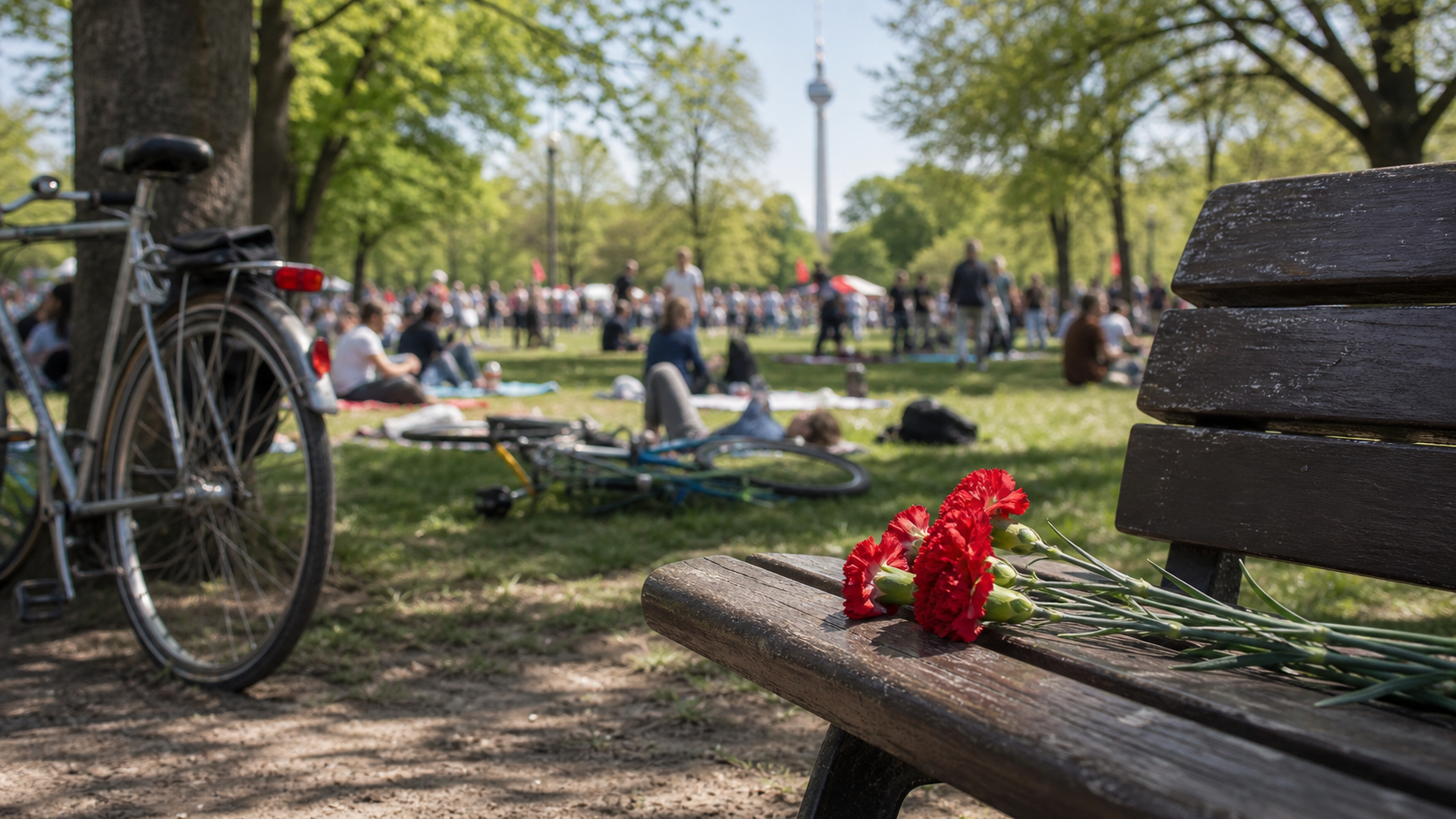
May Day picnic in a German city park

Labour Day

Public holiday Nationwide Falls on Friday

Labour Day on 1 May is a nationwide statutory public holiday in Germany. Beyond the day off, rallies, demonstrations, May festivals, outings and the weekday position shape the practical effect.

Author
Brückentage-Planer.de editorial team
Last checked
Source basis
official sources and editorial review
Overview

At a glance

What Friday 1 May 2026 means for the weekend, public life and local journeys.

Date
Labour Day falls on Friday in 2026.
Status
Nationwide
Nationwide public holiday on 1 May.
Applies in
nationwide
The nationwide Friday holiday supplies a long weekend without annual leave in 2026. Germany does not move Labour Day to a weekday in years when 1 May falls on Saturday or Sunday.
Planning cue
Check surrounding days
Check the Friday position, local events and adjacent days separately.

The nationwide Friday holiday supplies a long weekend without annual leave in 2026. Germany does not move Labour Day to a weekday in years when 1 May falls on Saturday or Sunday.

In 2026, the Friday date creates a three-day break without annual leave. The public-holiday status applies in every German state, so there is no additional regional scope check.

Local planning is still specific. Rallies, demonstration routes, May festivals, public transport and destination hours are published for the relevant city or region.

Leave calculation

Bridge days and leave

Weekend position, rallies and May outings

Read 1 May together with weekend position, events, city traffic and school. The holiday status is clear nationwide, but local impact varies.

In 2026, 1 May falls on Friday and forms a three-day break with Saturday and Sunday without using leave.

In cities, demonstrations, closures and public transport should be checked early.

For an outing, check the destination's published hours, the event venue and the specific return service.

Friday, 1 May 2026 follows directly after April and creates a long weekend without leave. Thursday, 30 April and Monday, 4 May remain normal working days.

Depending on the preferred block, one leave day on Thursday or Monday creates four days away from work. Check that choice against the rota, school breaks and the actual travel time.

Practice

Everyday rules

The nationwide Friday holiday supplies a long weekend without annual leave in 2026. Germany does not move Labour Day to a weekday in years when 1 May falls on Saturday or Sunday.

Work

Friday, 3-day break

Labour Day falls on Friday 1 May in 2026, creating a three-day weekend without leave. Taking Thursday or Monday off extends the break to four days.

School and family

Adjacent weekdays

The holiday is nationwide, but Thursday 30 April and Monday 4 May remain ordinary school and work days unless a state calendar says otherwise.

Local service

Check the local programme

Rallies and public events are part of 1 May's established context. For a 2026 journey, rely on the specific city's published venue, time and transport notices.

Published hours

Move routine shopping

Place routine shopping on Thursday or Saturday. Transport, emergency pharmacies, restaurants and individual events need a direct check of local published information.

Authorities, many offices and schools close on 1 May. Hospitals, transport, hospitality and other services follow their own public-holiday and shift arrangements.

For shopping, combine the public-holiday rule with the published opening time of the specific shop. A May festival or other event is a separate local decision.

German May Day park with bicycles and red carnations
Legislation

Legal context

Place Friday holiday pay and duties correctly without treating Thursday or Monday as automatically free.

2026 status

Nationwide public holiday on 1 May.

Pay and rota

Because 1 May 2026 is a Friday, section 2 of the Continued Remuneration Act is relevant to employees normally scheduled that day. Holiday duties also require the rota and section 9 of the Working Time Act.

Adjacent workdays

Thursday 30 April and Monday 4 May remain ordinary working days unless leave or another form of time off is approved.

1 May is a statutory public holiday in every German state. The legal baseline is therefore nationwide, even though work models and sector rules differ.

Anyone working that day should confirm the shift, supplements and any compensatory arrangement in the applicable workplace rules. The holiday status does not replace the contract or the actual rota.

Scope

States and scope

Nationwide day off, local city programme

The public-holiday status is uniform across Germany. Public-holiday rules apply to work, school and regular retail.

Local impact still varies: city centres, demonstration routes, public transport and excursion regions can need their own checks.

For teams, the date is easy to mark; for travel and appointments, the place still matters.

Labour movement

Why 1 May is Labour Day

From the struggle over working time to a public holiday

Labour Day grew out of the international labour movement. Demands for limited working hours, better conditions and political participation form its historical core.

In Germany, 1 May combines that political background with nationwide statutory public-holiday status. The day off and public debate therefore belong together.

This history also explains why trade-union rallies and public events are more than an incidental programme. They make the original purpose of the day visible.

The day off recalls the international labour movement and demands for shorter working hours, better conditions and political participation.

That history explains why rallies and union events can be part of Labour Day. Leisure planning and political public life can share the same date without being the same activity.

Public life

Rallies, May events and getting around

Rallies, May festivals and city traffic

Political rallies, demonstrations and local May events can take place alongside one another on 1 May. The published local programme shows which form shapes the day in a particular place.

For a city-centre journey, check the venue, route and current transport information. For a family outing outside the city, destination hours, reservations and the journey are the more useful details.

Leisure planning should not erase the day's political meaning. Visitors can respect rally areas and plan routes that allow public events and other uses of the holiday to coexist.

FAQ

Questions about Labour Day

Public-holiday status, retail, the 2026 weekend and city events.

Is Labour Day a nationwide public holiday in Germany?

Yes. 1 May is a statutory public holiday in every German state.

Are shops open on 1 May?

Do not treat Friday 1 May as an ordinary shopping day. Check a claimed local exception against the provider's published Labour Day hours.

Do I need a bridge day in 2026?

No. Because 1 May falls on Friday in 2026, it already creates a three-day weekend without leave. Approved leave on Thursday or Monday extends it to four days.

What should I check for a city trip?

Use the published programme, demonstration routes, possible closures and the relevant local public-transport information.

Next steps

Plan next

Combine the nationwide date with approved leave and the published local event programme.

Enter 1 May as the nationwide public holiday first, and mark Thursday or Monday as free only when leave or time off has been approved. This keeps the basic three-day block separate from an optional fourth day.

Then add the local programme for real journeys: rally venue, closures, public transport and published destination hours. Calendar subscription and export can keep the holiday and approved adjacent days visible together.

Before travelling into a city, check the venue, possible closures and the return journey. Outside the city, opening hours, reservations and the route are the decisive details.

Then mark the first normal working day after the weekend. The holiday, leave day and local event should remain three separate planning entries.

Sources & further reading

  1. Working Time Act section 9 : Federal rule for Sunday and public-holiday work exceptions.
  2. Continued Remuneration Act section 2 : Pay rule after statutory scope is established.
  3. KMK holiday calendar downloads : School-break downloads for calendar comparison.
  4. bpb on Labour Day : Historical context for 1 May, the labour movement and the public holiday.
  5. International Women's Day (8 March) : The regional spring public holiday in Berlin and Mecklenburg-Western Pomerania.
  6. Ascension Day : The Thursday public holiday with the clearest Friday bridge day.
  7. Whit Monday : The nationwide public holiday in the Whitsun weekend.